
Who Was Cú Chulainn, and Why Does He Still Matter?
Table of Contents
Who Was Cú Chulainn?
Cú Chulainn is known as the greatest warrior in Irish mythology, but his story extends beyond strength or victory. He is not famous for conquering Ireland, ruling a kingdom, or living a long life. Instead, his story stands out for exploring the cost of honour, the weight of destiny, and the loneliness of standing alone when others cannot. Like the tragic heroes of other traditions, such as Achilles with his fatal heel or Oedipus, doomed by prophecy, Cú Chulainn’s journey highlights the paradox of strength intertwined with vulnerability. The universal theme of a hero’s downfall lends his story a timeless resonance, situating him within the broader narrative of legendary figures whose immense power comes with unavoidable costs.
He was born as Sétanta and became famous as a child, guided by prophecy instead of his own choices. Once he took the name Hound of Culann, his life followed a path common to many Irish heroes: early talent, high expectations, and a fate shaped by duties he could not avoid. Each brave act limited his future, and every honour made him more bound to his role.
Cú Chulainn, unlike many other heroes, is not kept safe by his strength. His power sets him apart from others. His battle frenzy scares both friends and foes. His loyalty means he often fights alone. Even his death is not a victory, but a final stand against what cannot be changed.
Cú Chulainn’s story still matters because it is not about winning, but about endurance. It raises hard questions about fame, duty, and the cost for those who carry a society’s hopes. In Irish mythology, greatness rarely brings peace, and Cú Chulainn is the strongest example of this warning.
His Birth and the Problem of Destiny
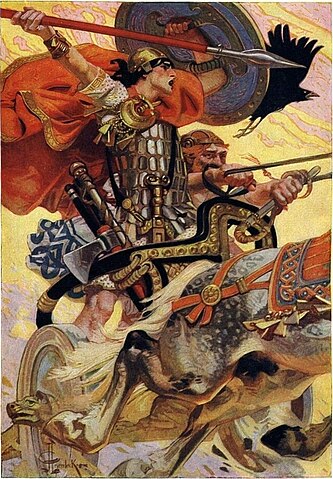
Cú Chulainn’s story begins not with freedom, but with inevitability. He was born as Sétanta, with a human mother, Deichtire, and a father often said to be the god Lugh Lámfada. In Irish mythology, such a birth always comes with consequences. To better understand Cú Chulainn’s story, it is essential to explore the primary texts of the Ulster Cycle, such as Táin Bó Cúailnge and other related sagas, which vividly depict his legendary life and struggles. Being touched by the divine means being marked, watched, tested, and claimed by fate.
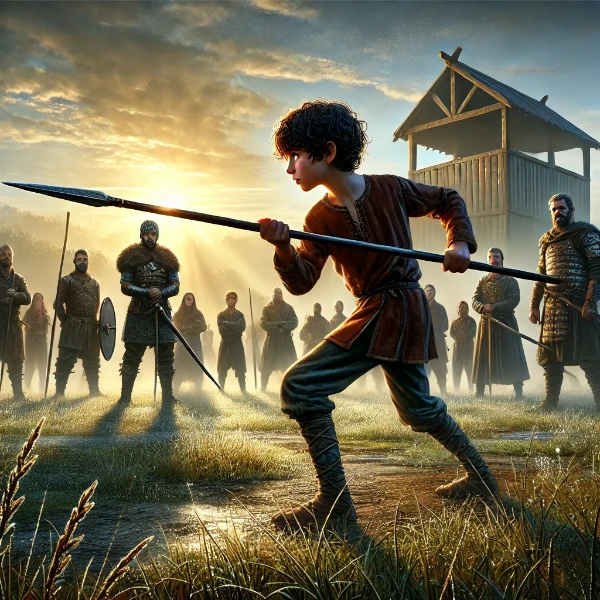
Prophecies followed Sétanta from a young age. Druids predicted he would gain lasting fame, but his life would be short. This deal is never a choice. In Irish myth, destiny is not something you bargain for; it is simply revealed. When Sétanta picks up weapons as a boy, he seeks honour, unaware he has already started down a path he cannot leave.
This is the main problem of destiny in his story. Cú Chulainn does not look for power or glory like later heroes. Instead, his life is shaped by duties from reputation, prophecy, and what others expect. Each brave act traps him more, and every success makes it harder for him to step back.
In Irish mythology, fate is not a distant goal but a force that shapes someone from the start. For Cú Chulainn, destiny does not wait for him; it shapes him from childhood, making sure that greatness and destruction develop together.
Becoming “The Hound”: Honour Over Comfort
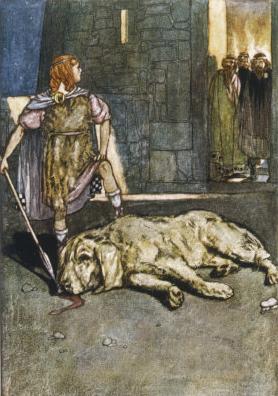
The story of Sétanta becoming Cú Chulainn is often seen as one of youthful bravery, but its real meaning is in what he gives up. When he kills the fierce guard dog of the smith Culann in self-defence, it creates a moral problem, not a victory. A protector is gone, and a home is left unguarded. In Irish society, honour requires making things right.
Rather than give money or say sorry, Sétanta offers himself. He promises to take the hound’s place until a new one can be raised. This choice is special not just for its bravery, but for its sense of responsibility. He picks duty over safety, and the trust of others over his own comfort. From then on, he is no longer just himself.
By taking the name Cú Chulainn, the Hound of Culann, he accepts a role based on service and watchfulness. A hound guards, endures, and stands alone between danger and those it protects. The name is not just for glory; it is a promise. It means living a life of answering calls for help, not avoiding them.
This choice sets the pattern for his whole story. Time after time, Cú Chulainn steps up when others do not. Honour keeps asking for more than just survival. Becoming ‘the Hound’ is not just how he got his name; it is when comfort stops mattering, and his journey toward being alone really starts.
The Battle Frenzy – Power That Is Not Heroic
One of Cú Chulainn’s most striking traits is his battle frenzy, called the ríastrad in Irish. At first, it seems like an unstoppable source of power that lets him defeat entire armies by himself. But in Irish mythology, this frenzy is not seen as admirable or brave. Instead, it is shown as frightening, unnatural, and very isolating.
During the ríastrad, Cú Chulainn’s body contorts beyond recognition. His features warp, his strength multiplies, and he becomes a being driven by violence rather than judgment. Crucially, this transformation does not distinguish between friend and foe. Allies fear it as much as enemies do. Order collapses in his presence, and control is lost.
This is not the power of a hero to be celebrated. It is the power of a weapon that cannot be controlled. The frenzy takes away choice and self-control, leaving only destruction in its wake. While other traditions praise rage in battle, Irish myth uses it as a warning: strength without balance is dangerous, even if used for a good reason.
The ríastrad makes Cú Chulainn even more isolated. It shows he is needed, but never fully accepted. People call on him in desperate times, but keep their distance when the danger is over. His greatest power lets him protect Ulster, but it also means he can never really be part of it.
The Táin: Why He Fought Alone
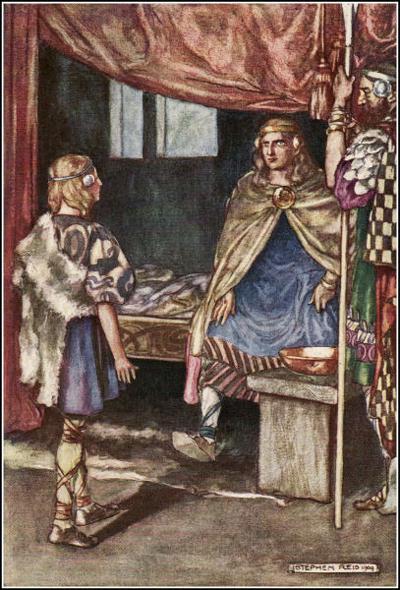
The story of the Táin Bó Cúailnge puts Cú Chulainn in his most famous role: the lone defender of Ulster. As Queen Medb’s army moves to take the Brown Bull of Cooley, the warriors of Ulster are struck by a curse that leaves them helpless. Only Cú Chulainn, still young and not affected by the curse, stands between invasion and defeat.
This explains how he ends up fighting alone, but the real question is why Irish mythology sees this solitude as so important. Cú Chulainn does not defend Ulster with big battles or armies. Instead, he faces Medb’s champions one at a time, meeting them at fords and borders. These single fights are not just about tactics; they are acts of symbolic resistance.
Fighting alone puts all of Ulster’s honour on one person. Each duel delays the enemy and shows that the land is still defended, even when its people are weak. Cú Chulainn’s isolation is not by chance; it matches the role he has chosen. He stands where others cannot, not for glory, but because no one else can or will pay the price.
The Táin does not show this as a victory to celebrate. It reveals the cost of depending on one protector. Cú Chulainn bleeds, wears himself out, and grows old quickly from the effort. His lonely stand saves Ulster, but it also adds to the pattern of sacrifice in his life. In Irish mythology, fighting alone is not heroic freedom; it is duty pushed to its limit.
Geasa, Choice, and the Trap of Honour
In the last part of Cú Chulainn’s life, it is not strength that brings him down, but obligation. This centres on the idea of geasa, sacred taboos or binding rules imposed on a person. In Irish mythology, geasa are not random curses; they are social, moral, and supernatural agreements. Living with honour means following them, and breaking them leads to disaster.
Cú Chulainn’s geasa pull him in opposite directions. He is forbidden from eating dog meat, yet also forbidden from refusing hospitality when it is offered. When he encounters some old women cooking a dog, he is trapped by the beliefs he has upheld his entire life. Refusing the food would break one geis; eating it would break another. There is no path that preserves honour.
This is the trap at the centre of his story. There is a choice, but every path leads to the same end. Irish mythology makes it clear: honour does not protect heroes; it destroys them. Cú Chulainn does not fall because he is weak or careless. He falls because he stays true to the code that made him great.
When he faces his last enemies, his body is already failing. His strength fades not because he is beaten, but because he follows the rules. The laws that shaped him from childhood now require a price. By breaking his geasa, Cú Chulainn does not lose his honour; he completes it. His death is not a moral failure, but the natural end of a life lived without compromise.
His Death – Why the Stone Matters
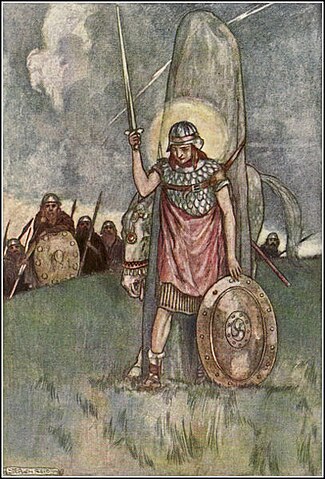
Cú Chulainn’s death is remembered more for his defiance than for its violence. Wounded, weakened by broken geasa, and left without his former strength, he knows the end has come. Even here, the story is not about survival. It is about how a warrior faces what cannot be avoided.
Instead of lying down to die, Cú Chulainn ties himself upright to a standing stone. In Irish warrior culture, falling meant losing both status and life. Staying upright meant staying present, facing the world, enemies, and judgment without retreat. The stone is not a weapon, but a statement.
Standing stones themselves carried deep meaning in the Irish landscape. They marked boundaries, memory, and permanence. In ancient Irish culture, these stones were not only physical markers but also spiritual symbols, often connected to the sacredness of the earth and the continuity of history. By tying himself to one, Cú Chulainn aligns his death with the land he defended. His body may fail, but his stance does not. Even his enemies hesitate to approach, unsure whether he still lives. Reputation outlasts flesh.
This last act finishes the pattern of his life. Cú Chulainn does not run from fate, ask for mercy, or look for comfort. He decides how his story ends. The stone matters because it makes his death a witness. It ensures his final moment is not a private loss, but a public show of resolve. In Irish mythology, honour is kept not by victory, but by how someone stands when there is nothing left to win.
What Cú Chulainn Represents
Cú Chulainn is not remembered as someone to copy, but as someone to understand. In Irish mythology, he shows the danger of total devotion to honour in a world that offers no mercy in return. His strength, loyalty, and courage are real, but these are also the very things that lead to his downfall.
Cú Chulainn stands for a community that values reputation over long life and duty over personal peace. He shows what happens when a whole community depends on one person who never says no. His isolation is not a personal weakness; it comes from being needed. The more people rely on him, the more alone he is.
Unlike heroes who become wiser and safer as they age, Cú Chulainn shines brightly but for a short time. His story shows an Irish view of heroism that is more tragic than triumphant. Greatness does not bring safety, and fame always has a cost. What lasts is not conquest, but memory.
In the end, Cú Chulainn is a warning hidden in legend. Strength without balance turns into a burden. Honour without limits becomes a trap. His story lasts because it asks a question rather than giving an answer: how much should one person carry, and what is lost when they carry it alone? This theme of an individual bearing immense burdens resonates with contemporary issues of leadership and responsibility. Consider modern figures in political spheres or fictional icons, such as superheroes, who often grapple with the weight of public expectations and personal sacrifice. These figures, much like Cú Chulainn, face the struggle of navigating their duties without losing their sense of self. This connection to modern times underscores the timelessness of the questions posed by Cú Chulainn’s story.
Further Reading
- How Did Cú Chulainn Die?
- What Were Cú Chulainn’s Geasa?
- The Battle Frenzy (Ríastrad) Explained
- Cú Chulainn in the Táin Bó Cúailnge
