
The Death of Cú Chulainn
Cú Chulainn’s death is among the most famous in Irish mythology, recorded in the Ulster Cycle. Mortally wounded after breaking his sacred geasa (taboos), he was struck by enemies using sorcery and prophecy. Refusing to die lying down, he bound himself to a standing stone, facing death on his feet. Only when the Morrígan appeared as a crow did his enemies dare approach, confirming his death. His final stand symbolises fate, honour, and heroic defiance in Irish myth.
How Did Cú Chulainn Die?
Cú Chulainn is the greatest warrior of Irish mythology, famed for his superhuman strength and tragic destiny. His death marks the end of Ulster’s heroic age and stands as one of the most powerful stories in the Ulster Cycle.
Preserved in medieval Irish manuscripts, the story of Cú Chulainn’s death is a blend of prophecy, broken taboos, divine intervention, and heroic defiance. This article examines how he died, the events leading up to his final stand, and his meaning in Irish mythology.
Who Is Cú Chulainn?
Who is Cú Chulain? Cú Chulainn is a mortal hero of the Ulster Cycle, renowned as the protector of the province of Ulster. Trained in combat from childhood, he possesses near-divine strength, battle frenzy, and unmatched skill with weapons.
Though invincible in youth, he is always bound by fate. His life is shaped by prophecy, geasa, and the influence of gods and supernatural forces.
Origins and Meaning of the Name
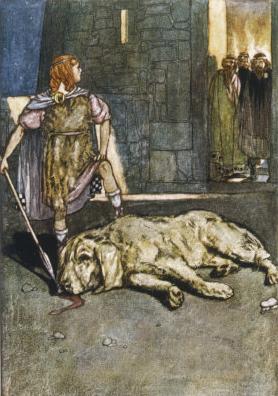
The name Cú Chulainn means “Hound of Culann.”
He earned it after killing the smith Culann’s guard dog and offering to take its place until a replacement could be raised. The name reflects loyalty, protection, and the high cost of honour.
Early references to his name and deeds appear in Old Irish texts preserved in medieval manuscripts.
The Story of Cú Chulainn’s Death
As Cú Chulainn ages, signs of decline appear. His enemies gather, aided by dark magic and ancient curses.
The Breaking of the Geasa
Cú Chulainn lives under strict geasa (sacred taboos). Two of them come into fatal conflict:
- He must never eat dog meat.
- He must never refuse food offered by a woman.
An old woman, acting under supernatural influence and often interpreted as a manifestation of The Morrígan, offers Cú Chulainn roasted hound flesh at the roadside. Bound by conflicting geasa, he cannot refuse food from a woman, nor can he eat dog meat. When he accepts the meal, the geis is broken, and the arm he uses to eat is immediately weakened, leaving him vulnerable in the battles that follow.
The Final Battle
Weakened by the breaking of his geasa, Cú Chulainn is drawn into his final battles against the sons of Calatin, warriors brought into being through dark magic and raised solely to destroy him in revenge. As the fighting unfolds, Cú Chulainn is struck by a series of enchanted spears, each cast in fulfilment of prophecy.
One spear kills a king, another kills a noble horse, and the final spear is destined for a great warrior. With each blow, his strength diminishes, yet he continues to fight, refusing to collapse or retreat even as his wounds become fatal.
The Standing Stone
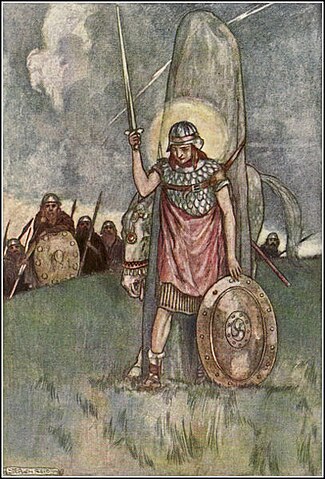
Knowing death is inevitable, Cú Chulainn binds himself upright to a standing stone using his own belt so that he will not fall in battle. By doing this, he chooses to meet death standing, facing his enemies rather than dying helplessly on the ground.
So fierce is his reputation that his enemies believe he is still alive and dare not approach him. Only when a crow lands upon his shoulder—revealing the presence of The Morrígan, goddess of war and fate—do they realise that Cú Chulainn has finally died.
The Morrígan’s Arrival
The crow is The Morrígan, the goddess of war, fate, and death, who has long been linked to Cú Chulainn’s destiny throughout the Ulster Cycle. Appearing in her crow form at the moment of his death, she signals that his life force has finally departed.
Only then do his enemies approach the body and strike, certain that the champion of Ulster is truly dead.
Death Even in Defeat
When Lugaid mac Con Roi, son of Cú Roí, finally dares to approach and cuts off Cú Chulainn’s head, the hero’s sword falls from his grasp and cuts off Lugaid’s hand. Even in death, Cú Chulainn remains dangerous, striking his enemy one final time and proving that his power does not leave him easily.
Powers, Abilities, and Attributes
Before his death, Cú Chulainn was known for:
- Superhuman strength
- The ríastrad (battle frenzy)
- Mastery of the spear Gáe Bolga
- Near invulnerability while his geasa remained unbroken
His decline begins only when fate and taboo collide.
Symbols and Associations
Cú Chulainn’s death is rich in symbolism:
- Standing stones – endurance, memory, heroic legacy
- The crow – fate, war, and the Morrígan
- Broken geasa – the inescapability of destiny
- Upright death – honour over survival
Role in the Ulster Cycle
The death of Cú Chulainn effectively ends the heroic age of Ulster. Without its champion, the province loses its divine protection and martial dominance.
His story stands as the final great tragedy of the Ulster Cycle.
Cultural and Religious Significance
To early Irish audiences, Cú Chulainn represented the ideal warrior bound by honour rather than victory. His death reinforced beliefs about fate, taboo, and the limits of human power.
He was admired, feared, and remembered rather than worshipped.
Symbolism and Interpretation
Cú Chulainn’s death reflects core Irish mythological themes:
- No hero escapes fate.
- Honour matters more than survival.
- Strength without wisdom leads to tragedy.
- Memory preserves power beyond death.
Legacy and Influence
Cú Chulainn’s death has inspired:
- Medieval Irish poetry and prose
- Nationalist symbolism in later centuries
- Modern literature, art, and folklore
- Comparisons to Achilles and other doomed heroes
He remains one of Ireland’s most enduring mythological figures.
Frequently Asked Questions
How did Cú Chulainn die?
He was mortally wounded in battle, tied himself to a standing stone, and died upright after breaking his sacred geasa.
Why did Cú Chulainn tie himself to a stone?
He refused to die lying down and chose to meet death standing, preserving his honour.
What role did the Morrígan play in his death?
The Morrígan appeared as a crow, confirming his death and fulfilling prophecy.
Is Cú Chulainn a god?
No. He is a mortal hero with supernatural abilities, not a god.
Sources and Manuscripts
Primary sources include:
Modern scholarship and translations:
